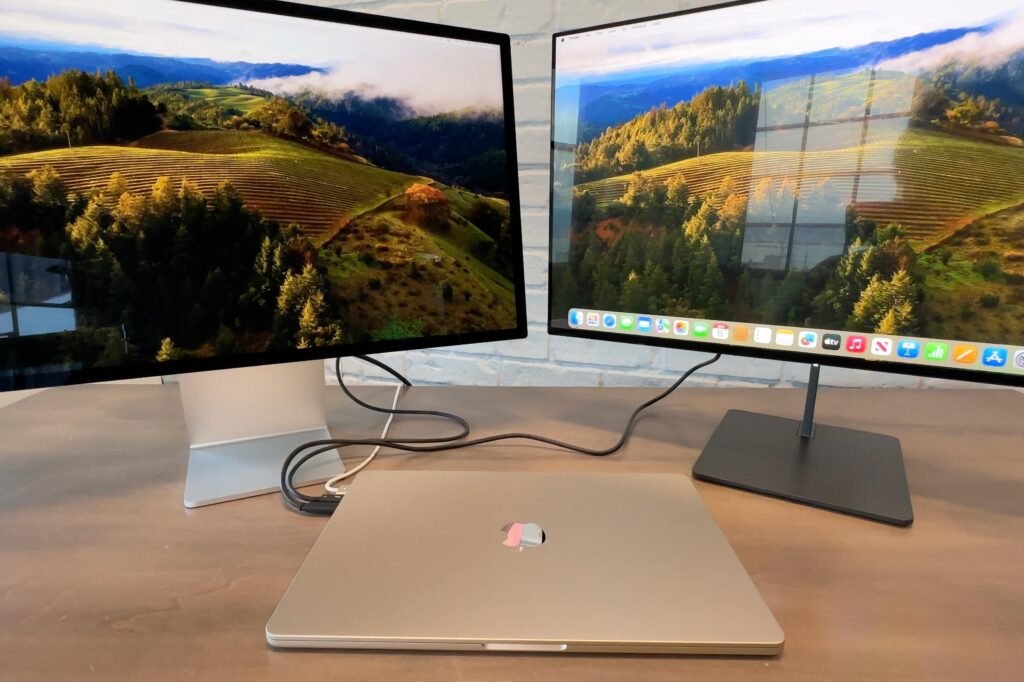
If you’re shopping for a premium ultraportable laptop in the U.S., two devices consistently dominate the conversation: the Apple MacBook Air M3 and the Dell XPS 13.
Both are sleek, powerful, and designed for modern workflows—but they are built on completely different philosophies.
- One prioritizes efficiency, simplicity, and ecosystem integration
- The other focuses on flexibility, performance options, and compatibility
So which one is actually worth your money in 2026?
This in-depth guide will break down everything you need to know—from performance and battery life to real-world usability—so you can confidently choose the right laptop.
MacBook Air M3 — Complete Review


Price in the U.S.
- Base model (8GB RAM / 256GB SSD): $1,099
- Recommended (16GB RAM / 512GB SSD): $1,399–$1,599
- Fully upgraded: $1,799+
Apple rarely discounts heavily, but student deals and seasonal sales can reduce prices slightly.
Performance — Efficiency Meets Power
The MacBook Air M3 is powered by Apple’s M3 chip, built on a 3nm architecture. This chip delivers:
- 8-core CPU
- Up to 10-core GPU
- Hardware-accelerated ray tracing
- AI-enhanced processing
Real-World Performance:
- Instant app launches
- Smooth multitasking with dozens of tabs
- 4K video editing without lag
- Fast coding and compiling
Unlike traditional laptops, the M3 chip is optimized for macOS, which means better real-world performance than raw specs suggest.
Battery Life — Industry-Leading
Battery life is where the MacBook Air M3 absolutely dominates:
- Apple claim: Up to 18 hours
- Real-world use: 13–16 hours
You can:
- Work all day without charging
- Travel without carrying a charger
- Stream video for hours
No Windows laptop consistently matches this level of efficiency.
Silent, Fanless Design
One of the biggest advantages:
- No fan
- No noise
- No distractions
Even under moderate workloads, the MacBook Air remains completely silent—perfect for libraries, offices, and remote work.
Display — Clean, Accurate, Reliable
- 13.6-inch Liquid Retina display
- 2560×1664 resolution
- Excellent color accuracy (P3 wide color)
- 500 nits brightness
While it doesn’t have OLED-level contrast, it’s more accurate for creative work.
Apple Ecosystem — A Major Advantage
If you use Apple products, the MacBook becomes exponentially more valuable:
- AirDrop (instant file sharing)
- Handoff (continue tasks across devices)
- iMessage & FaceTime integration
- Universal Clipboard
This ecosystem advantage is something Windows laptops simply cannot replicate.
Portability & Build Quality
- Weight: 2.7 lbs
- Ultra-thin aluminum design
- Premium feel and durability
It’s one of the most portable premium laptops available.
Dell XPS 13 — Complete Review


Price in the U.S.
- Base model: $999
- Mid-range: $1,199–$1,399
- OLED / premium configs: $1,499–$1,699+
Dell frequently offers discounts, making it more price-flexible than Apple.
Performance — Flexibility First
The latest XPS 13 models come with:
- Intel Core Ultra processors OR
- Snapdragon X Elite (ARM-based AI chips)
What this means:
- Strong multitasking
- Better compatibility with legacy apps
- AI-enhanced features (on newer chips)
Unlike Apple, Dell offers multiple configurations, giving users more control over performance.
Display — Best-in-Class Visuals
Dell’s biggest advantage is its display options:
- FHD+ (longer battery life)
- OLED (premium visual experience)
OLED Benefits:
- Deep blacks
- Infinite contrast
- More vibrant colors
For watching content, OLED is noticeably better than MacBook’s display.
Windows Ecosystem — Maximum Compatibility
With Windows 11, you get:
- Full Microsoft Office compatibility
- Enterprise software support
- Better gaming compatibility
- Broader app ecosystem
This makes the XPS 13 ideal for professionals and business users.
Cooling & Sustained Performance
Unlike the MacBook Air:
- XPS 13 uses active cooling (fans)
- Handles prolonged heavy workloads better
- Less risk of thermal throttling in demanding tasks
Design & Build Quality
- Weight: ~2.6–2.9 lbs
- Premium aluminum + carbon fiber design
- Ultra-thin bezels (InfinityEdge display)
It looks futuristic and modern—arguably more striking than the MacBook.
MacBook Air M3 vs Dell XPS 13 — Deep Comparison
Performance Philosophy
- MacBook Air → optimized, efficient, silent
- XPS 13 → flexible, configurable, versatile
- If you want simplicity → MacBook
- If you want control → XPS
Battery Life
- MacBook Air: Best in class
- XPS 13: Good, but inconsistent depending on configuration
Winner: MacBook Air M3
Display Quality
- MacBook: Accurate, consistent
- XPS OLED: Stunning, immersive
Winner: XPS 13 (OLED models)
Software & Ecosystem
- macOS: Smooth, optimized
- Windows: Flexible, universal
Depends on your needs
Ports & Connectivity
Both are limited:
- USB-C dominant
- No traditional USB-A
Dell may offer slightly more flexibility with Thunderbolt configurations.
Noise & Thermals
- MacBook: Silent
- XPS: Fans under load
Winner: MacBook
Best Use Cases — Which One Fits You?
Students & Everyday Users
MacBook Air M3 wins
- Better battery life
- Simpler experience
- Lightweight
Professionals & Business Users
Dell XPS 13 wins
- Windows compatibility
- Enterprise tools
- Broader software support
Creators (Photo/Video)
Depends:
- MacBook: Better optimization
- XPS OLED: Better visuals
Travelers & Remote Workers
MacBook Air M3 wins easily
- Longer battery
- Silent operation
Gamers
Dell XPS 13 (slightly better)
- Windows gaming support
Value for Money (U.S. Market)
MacBook Air M3
Pros:
- Long lifespan
- High resale value
- Lower maintenance
Cons:
- Expensive upgrades
Dell XPS 13
Pros:
- Frequent discounts
- More configuration options
Cons:
- Lower resale value
Final Verdict — Which One Should You Buy?
Best Overall: MacBook Air M3
Choose this if you want:
- Long battery life
- Smooth, reliable performance
- A premium everyday laptop
Ideal for most users in the U.S.
Best Windows Alternative: Dell XPS 13
Choose this if you want:
- Windows flexibility
- OLED display
- Business compatibility
Ideal for professionals and power users
Final Buying Advice
If you’re still unsure, follow this simple rule:
- Want battery + simplicity → MacBook Air M3
- Want freedom + compatibility → Dell XPS 13