Discover the 5 upcoming 2026 smartphones set to redefine the budget segment — from huge batteries and flagship-style cameras to surprise performance and carrier-ready 5G. Deep specs, expected prices, buying guide and why each phone matters.
TL;DR (Quick Summary) — 2026’s budget-class shake-up is real. Expect phones with huge batteries, faster SoCs trickling down, AI camera features, and longer software support creeping into the sub-$300/₹25,000 tier. The five devices to watch: OnePlus Nord 6, Motorola moto g (2026), Motorola moto g power (2026), Samsung’s upcoming F/A-series budget models, and Xiaomi/Redmi’s Turbo series. Each is likely to push competitors to raise the baseline for what “budget” delivers.
Why 2026 feels different for budget phones (short answer)
Over the last few years premium features steadily moved down the ladder: higher-refresh displays, AI camera processing, and 5G support started in flagships and are now standard in mid- and even some low-end phones. In 2026 we’ll see manufacturers intentionally ship features that were previously mid-range only into aggressively priced models — and they’re doing it strategically to win market share in price-sensitive regions (India, Southeast Asia, Latin America). Expect:
- Batteries >5,000 mAh becoming common in budget models.
- Faster, efficient chipsets (Dimensity / Snapdragon “lite”/6-series) optimized for AI tasks.
- AI camera processing and higher-megapixel sensors with software trickery that masks cheaper optics.
- Longer update promises — a few OEMs are experimenting with longer Android update windows even on inexpensive models.
These trends mean the “value floor” for phones will rise in 2026 — and the five phones below are the best examples of that shift.
How we picked these five phones
Selection criteria (what matters for “will change the budget segment”):
- Confirmed or strongly leaked 2026 launch (official pages, reputable leaks).
- Feature uplift vs previous generations (battery, display, SoC, camera AI).
- Aggressive expected price / positioning (targeting sub-$300 / ₹25k or similar regional bands).
- High potential market impact — brands with distribution or marketing muscle to move prices and expectations.
The 5 phones (deep dive)
Each phone section includes: what’s new, expected specs, why it matters for budget buyers, likely price band, and a short verdict.
1) OnePlus Nord 6 — “Flagship tricks on a budget”


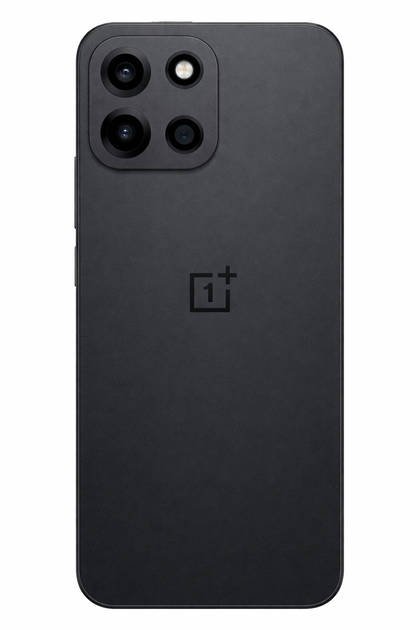
Why it’s on the list: OnePlus’ Nord line historically brought near-flagship value into the mid-range. Early 2026 leaks and reporting show the OnePlus Nord 6 intends to push performance and camera quality further while keeping the Nord price ethos intact.
What’s new / rumors
- Likely to use a refreshed mid-to-upper mid SoC (rumors point to Snapdragon 8s Gen 4 / equivalent), making flagship-class performance more accessible.
- Hefty battery options rumored in some leaks (even claims of very large batteries in some variants).
- Strong AI camera features and software-based improvements rather than relying solely on optics.
Expected key specs (rumor-based)
- SoC: Snapdragon 8s Gen 4 (or similar upper-mid alternative)
- Display: 6.4–6.7″, 120Hz AMOLED
- Camera: 50–108MP main with multi-frame AI processing
- Battery: 5,000–6,000mAh (variants possible)
- Software: OxygenOS with OnePlus’ AI camera and performance modes
Why it matters for the budget segment
If OnePlus brings an 8s-class chipset and advanced AI camera to a Nord price bracket (or only slightly above), competitors will be forced to offer better SoCs or accept being outmatched. That raises the performance baseline for what buyers can expect in the ₹20k–35k band.
Likely price band
- Global: ~$300–$450 (depending on trim)
- India: likely ₹24,000–₹35,000 for early models (leaks point to competitive pricing).
Short verdict: Nord 6 could bring near-flagship performance and advanced camera features into the mid/budget bracket — a key disruptor if OnePlus keeps pricing aggressive.
2) Motorola moto g (2026) — “Consistent value, now smarter”
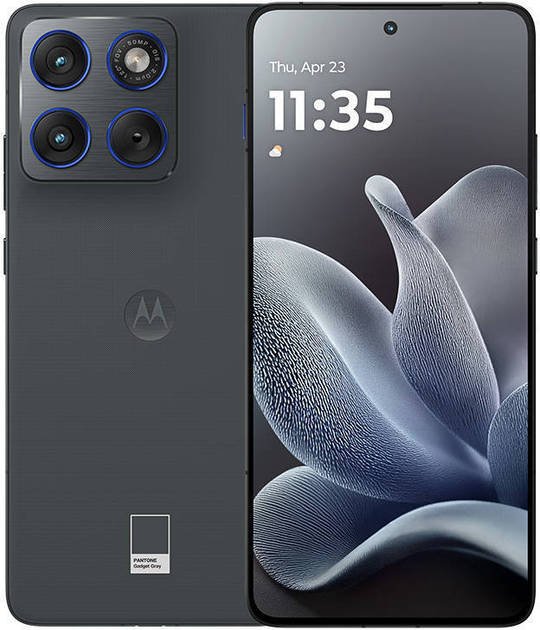

Why it’s on the list: Motorola’s moto g family has been a perennial budget favorite. For 2026, the brand has refreshed the moto g line with clear upgrades in display, camera, and an emphasis on audio and durability — all at budgetish pricing. Official product pages for the 2026 moto g show a package built to punch above its price.
What’s new / confirmed (official)
- A 120Hz display and improved camera system (50MP main + AI features) on models positioned at budget prices.
- Improved build with vegan-leather options and water-repellent design — a premium feel at a lower price point.
Expected key specs (from OEM pages / listings)
- SoC: MediaTek Dimensity series (examples in listings: Dimensity 6300 / 7060 variants).
- Display: 6.6–6.7″, up to 120Hz
- Camera: 50MP main, 32MP selfie (some models)
- Battery: ~5,200mAh with 30W charging (depending on model).
Why it matters for the budget segment
Motorola trades on consistent value and carrier partnerships. If Motorola includes near-midrange displays (120Hz), good cameras, and large batteries while sticking to aggressive pricing (their history suggests they will), other brands will be forced to upspec cheap models or lose customers. Also, Motorola tends to prioritize stock-ish Android, which many value-minded buyers prefer.
Likely price band
- Global: ~$199–$299
- India: ~₹12,000–₹22,000 (depending on variants).
Short verdict: moto g (2026) reinforces Motorola’s value reputation and nudges the budget segment to demand improved displays and battery life as standard.
3) Motorola moto g power (2026) — “Battery boss for budget buyers”
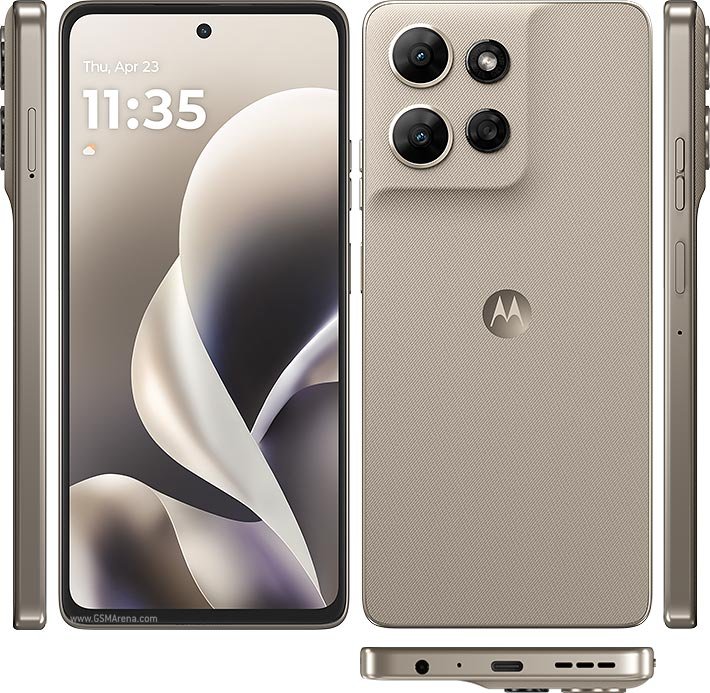

Why it’s on the list: The moto g power variants historically prioritized battery life and practical performance. Early 2026 coverage and official pages show Motorola doubling down: large batteries, acceptable performance, and a sub-$300 price — a combination that can redefine value for many markets.
What’s new / confirmed (official)
- Motorola’s product page advertises “2-day battery life” and low-light camera improvements for the moto g power (2026).
Expected key specs
- Battery: 5,000mAh+ marketing (claimed “2-day” life)
- Display: Large LCD, 90–120Hz (varies by SKU)
- SoC: MediaTek Dimensity 6000 series or similar
- Charging: 30W Turbo or similar
Why it matters for the budget segment
Huge battery life has a real upsell — users who prioritise uptime over specs will choose these models, pushing competitors to match battery capacity and efficiency. When a value phone can comfortably last 48 hours with moderate use, the concept of “budget compromise” shifts from daily usability to optional premium features — that’s disruptive.
Likely price band
- ~$149–$249 (depending on market).
Short verdict: If Motorola balances battery capacity with acceptable performance and price, many buyers will prioritize uptime — forcing others to respond in kind.
4) Samsung Galaxy F70 / Galaxy A07 (2026 budget lineup) — “Samsung’s price-pressure play”
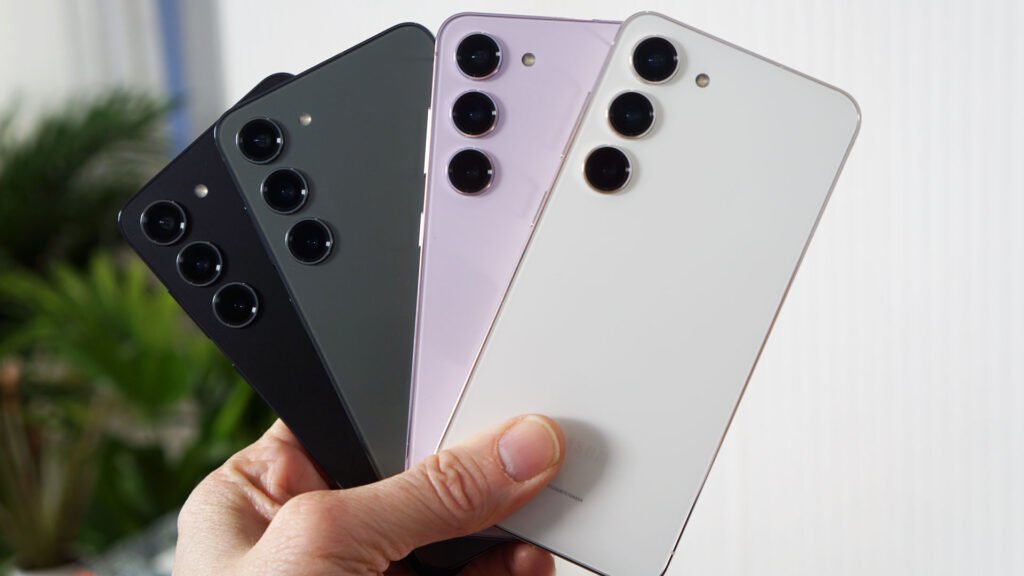
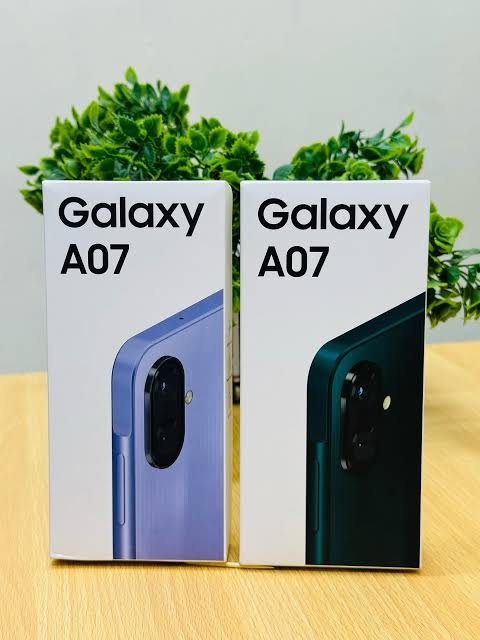
Why it’s on the list: Samsung is aggressively expanding its affordable F/A series to target younger, content-creation centric buyers. A confirmed February 2026 launch for devices like the Galaxy F70 shows Samsung intends to push camera and content creation features into affordable tiers — and Samsung’s distribution and brand trust mean it can quickly reset consumer expectations.
What’s new / reported
- The Galaxy F70 series (India launch in February 2026) is positioned under ₹30,000, focused on camera and content creation features.
- The Galaxy A07 5G is also reported to be launching soon in India with 5G and a 50MP camera, indicating Samsung’s push on connectivity + camera in budget bands.
Expected key specs
- 5G connectivity on select A/F models
- Camera: 50MP main in entry-level A-series variants
- Battery: 5,000mAh class likely on F/A devices
- Display: 6.5–6.8″ LCD/AMOLED options depending on SKU
Why it matters for the budget segment
Samsung’s strength is distribution and brand trust. When Samsung brings content-creation-oriented marketing and 50MP cameras into sub-₹30k phones, it forces other OEMs to either match features or battle on price — either outcome upgrades the baseline buyer expectations. Additionally, Samsung’s software updates policy (recently more competitive) makes their budget buys more future-proof.
Likely price band
- India: under ₹30,000 (F70 position) — A07 likely even cheaper.
Short verdict: Samsung’s A/F push will make “brand-new Samsung” in the budget range a true alternative to Xiaomi/POCO and other established budget players — raising expectations for camera and connectivity in entry tiers.
5) Redmi / POCO: Turbo series and POCO M8 (Xiaomi sub-brands) — “Spec aggression at low prices”

Why they’re on the list: Xiaomi and its sub-brands (Redmi, POCO) are masters of spec-for-price. 2026 rumors and event pages show Redmi investing in “Turbo” series phones (huge batteries, high MP), and POSCOmodels continue to pack features at aggressive prices. Because these brands frequently undercut competition with raw specs, their 2026 models can force the whole market to up their game.
What’s new / reported
- Redmi Turbo 5 Max reportedly offers a 9,000mAh battery and is being marketed with high battery capacity as the standout. Launched in China with aggressive battery claims.
- POCO M8 and other upcoming Xiaomi/Redmi launches are listed among 2026 upcoming devices — Xiaomi remains aggressive in the price/spec tradeoff.
Expected key specs (examples from leaks/local launches)
- Battery: extremely large (6,000–9,000mAh in Turbo variants).
- Display: 90–120Hz LCD/AMOLED depending on SKU
- SoC: MediaTek Dimensity/ Snapdragon 6-series (tuned for battery and AI tasks)
- Camera: 50–200MP main sensor on some Redmi models (software post-processing does heavy lifting).
Why it matters for the budget segment
Spec aggression — especially around battery and camera MP numbers — forces vendors to either match on battery or differentiate elsewhere (design, updates, software). When a mass-market Redmi phone ships with 9,000mAh, the consumer expectation for battery in that price band changes dramatically. Competitors either match the battery or target other selling points (durability, updates, camera quality).
Likely price band
- China: extremely competitive; global variants may be slightly costlier. Typical Redmi/POCO budget tiers: $120–$300 depending on model and region.
Short verdict: Xiaomi/Redmi/POCO’s willingness to throw big batteries and high-MP sensors into affordable models means competitors will need to respond on capacity, price, or software polish — permanently changing what “budget” offers.
Side-by-side quick comparison (snapshot)
| Phone (2026) | Key differentiator | Likely price band |
|---|---|---|
| OnePlus Nord 6 | Near-flagship SoC + AI cameras | $300–$450 (INR ~24k–35k). |
| moto g (2026) | Improved 120Hz display & balanced specs | $199–$299. |
| moto g power (2026) | Best battery for the price (2-day life claim) | $149–$249. |
| Samsung F70 / A07 | Brand trust + camera + 5G in affordable tier | India: under ₹30k. |
| Redmi Turbo / POCO M8 | Massive batteries / spec-for-price aggression | $120–$300 (region dependent). |
(Numbers are estimated from leaks and official teasers — treat them as directional rather than absolute.)
How these phones will “completely change” the budget segment — 6 concrete impacts
- Battery expectations will shift — 5,000mAh and above will become a common baseline; extreme cases (6,000–9,000mAh) will redraw how people value budget phones.
- Performance floor rises — faster, more efficient midrange SoCs (Dimensity / Snapdragon lite variants) and better thermal tuning mean smoother gaming and multitasking even at low price points.
- AI cameras become the differentiator — software processing will mask cheaper optics, offering better low-light, portrait and multi-frame HDR results in phones that cost a fraction of flagships.
- Longer software support trickles down — if major brands commit to more updates for mid/budget ranges, longevity becomes a selling point rather than a premium perk.
- Brand-driven market shifts — when Samsung or OnePlus actively price-upgraded models for affordability, OEMs with smaller distribution must either match or specialize (e.g., POCO doubling down on specs).
- Price/perf wars intensify — manufacturers will cut costs in design and margins to add headline features (battery, camera MP, display refresh), meaning better value for consumers and more aggressive product cycles.
Buying guide — How to choose among these new 2026 budget champions
- If you want all-day endurance: choose phones prioritizing battery (moto g power, Redmi Turbo variants). Look for ≥5,000mAh and charger speed.
- If you want gaming / smooth UI: pick models with 120Hz displays and a stronger SoC (OnePlus Nord 6 / higher moto g SKUs). Make sure thermals and sustained performance reviews are positive.
- If camera is top priority on a budget: favor phones that advertise AI camera features and multi-frame HDR rather than only megapixel counts — Samsung’s F/A series and OnePlus Nord often emphasize image processing.
- If brand & updates matter: Samsung and Motorola generally have better official support channels — if updates and security patches matter, weight your decision accordingly.
- For absolute price/perf value: POCO/Redmi will likely deliver the best specs-per-rupee/dollar, but be mindful of software ads, bloatware, and update cadence.
FAQs (quick answers)
Q — Are these phones already on sale?
A — Some are confirmed/teased for 2026 launches (Samsung F70 scheduled for Feb 2026 in India; official Motorola pages list moto g 2026 models), while others are strongly leaked (OnePlus Nord 6, Redmi Turbo variants). Check local launch pages for exact release dates.
Q — Should I wait for 2026 budget launches before upgrading?
A — If your current phone is functioning fine and you want better battery, cameras or 5G at a low price, waiting a few weeks for official launches can be worth it — many 2026 models materially improve budget expectations. If you need a phone immediately, compare current mid-2025 models to see deals.
Q — Will 9,000mAh batteries (Redmi Turbo) make phones bulky?
A — Yes, extreme capacity usually increases thickness and weight. Manufacturers balance battery capacity with chassis design; decide whether absolute battery life outweighs ergonomics.
Sources & further reading
(Top load-bearing sources used above — open to the public)
- Motorola product pages for moto g (2026) and moto g power (2026).
- OnePlus Nord 6 coverage and rumors (TechAdvisor, 91mobiles).
- Samsung Galaxy F70 & A07 launch reporting (Times of India and Indian outlets).
- Redmi Turbo 5 Max coverage (local/regional reporting on 9,000mAh variants).
- Upcoming phone lists and price trackers (91mobiles, MySmartPrice).
Final thoughts — what to watch between now and launch
- Official launch dates and regional SKUs — many OEMs split models across regions (China vs India vs global) and specs/pricing vary. Watch official event pages for SKU details.
- Real-world battery & thermal tests — headline specs are great, but sustained performance and battery degradation matter. Look for independent reviews post-launch.
- Software update promises — an OEM promising 3-4 years of OS/security updates on budget phones changes lifetime value; treat that as a major factor.